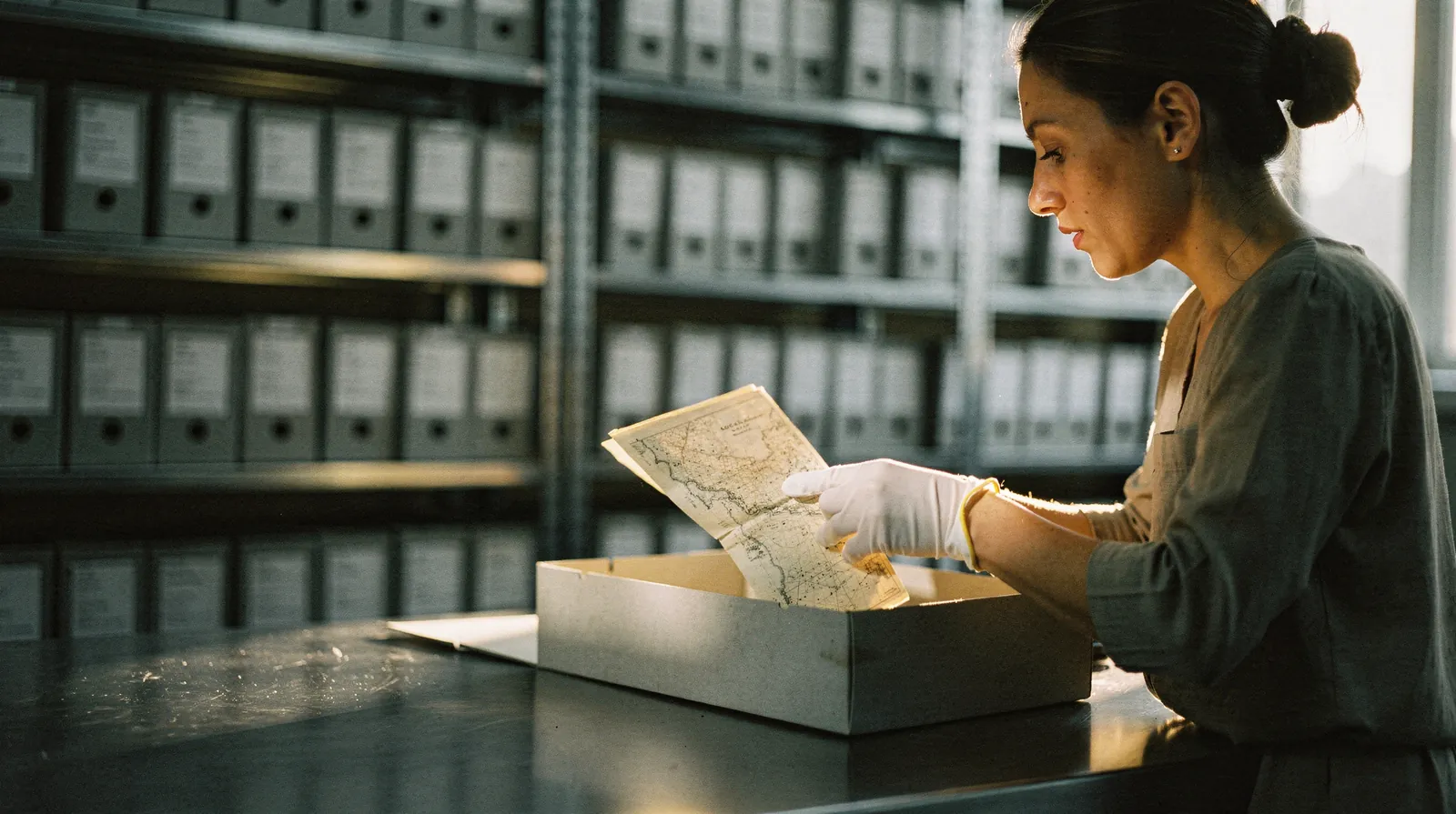

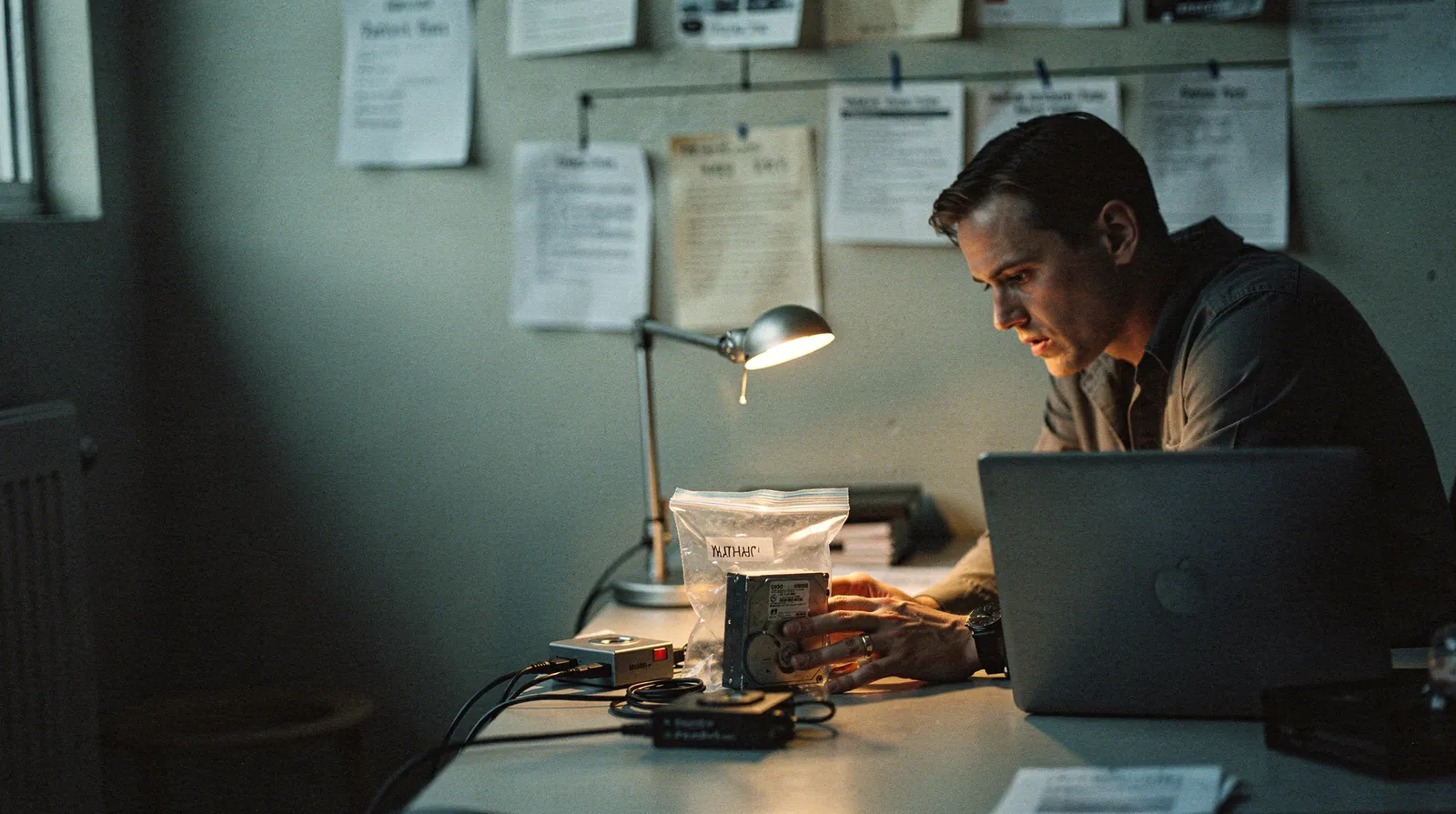
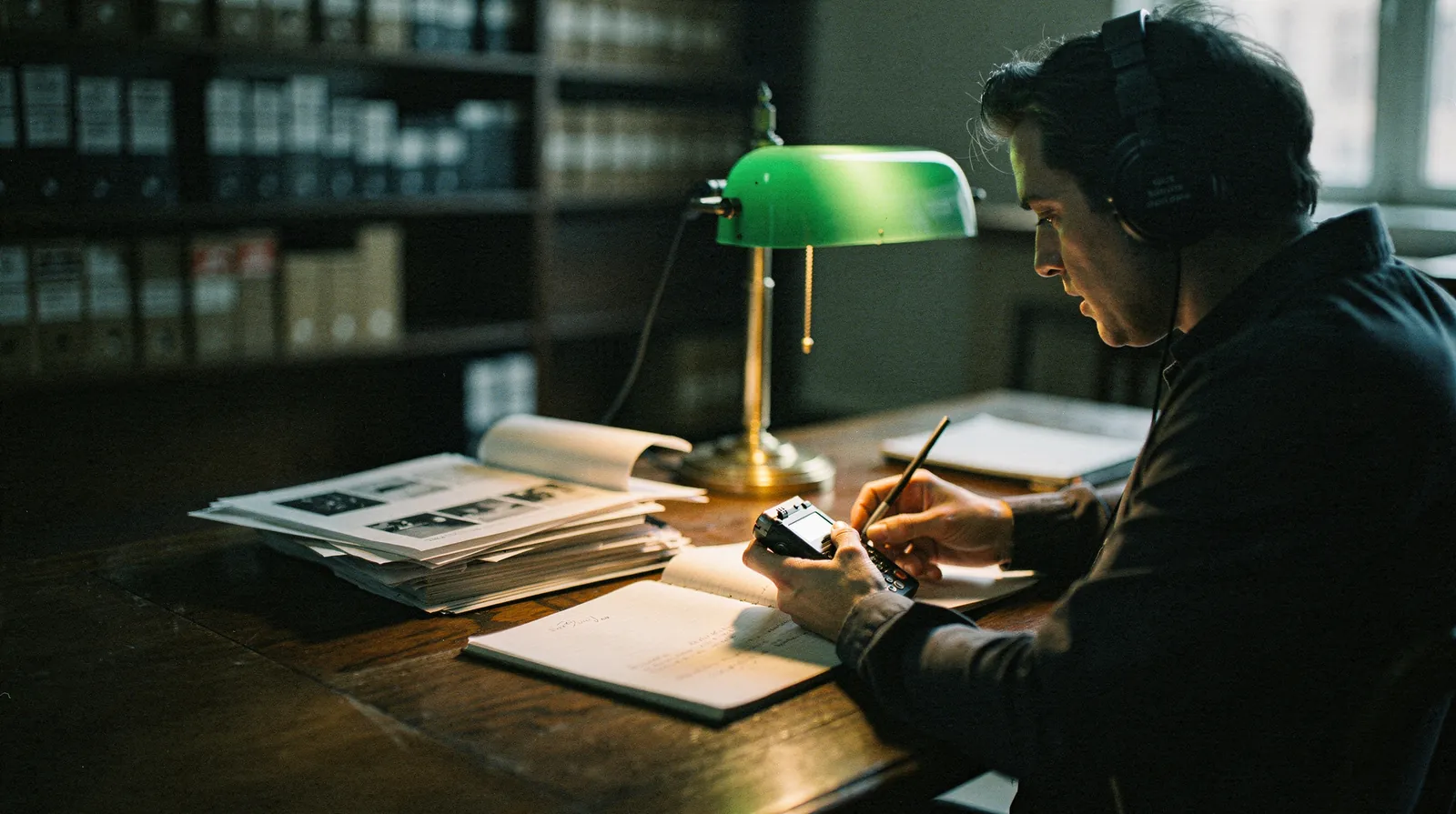

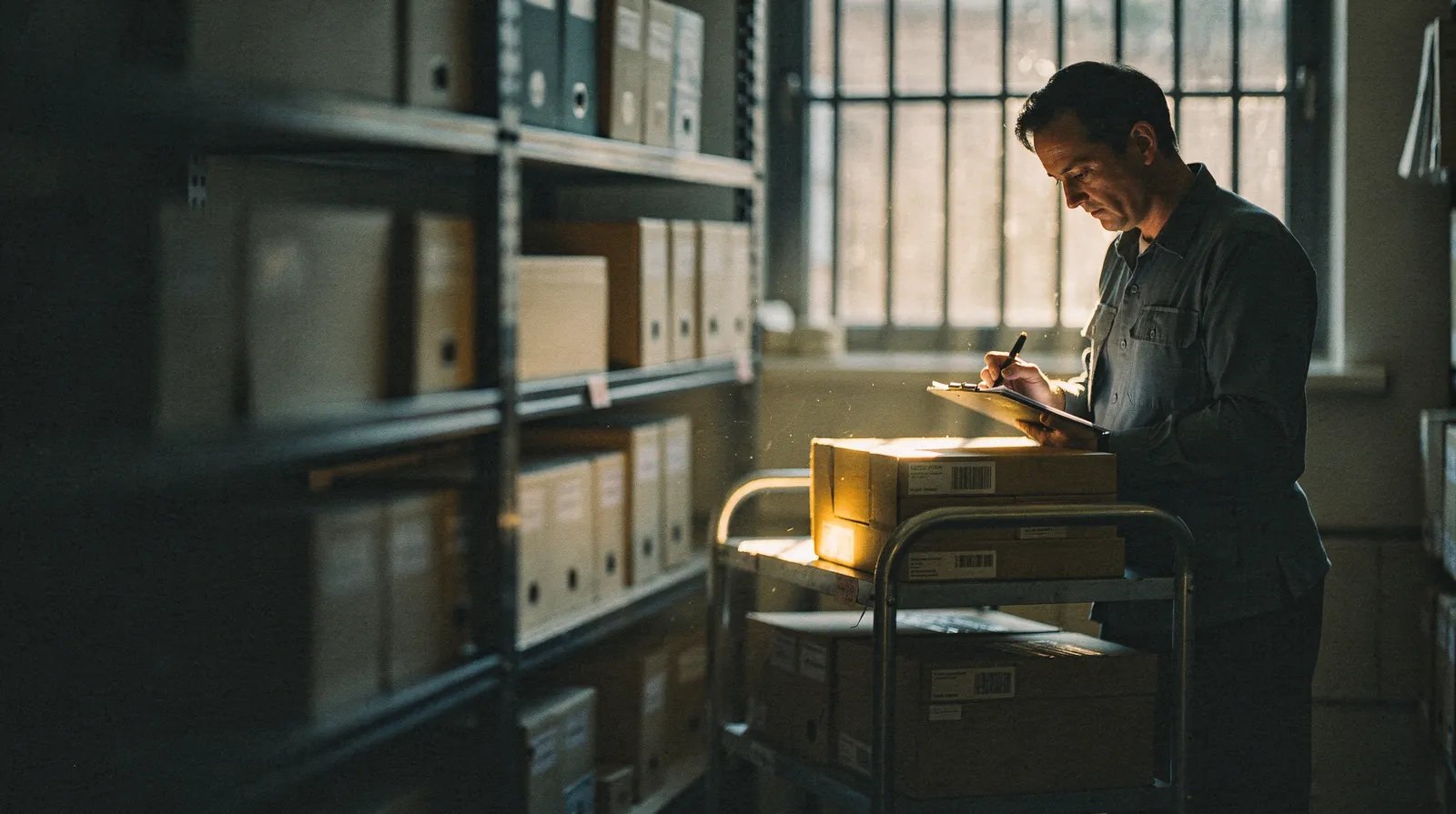
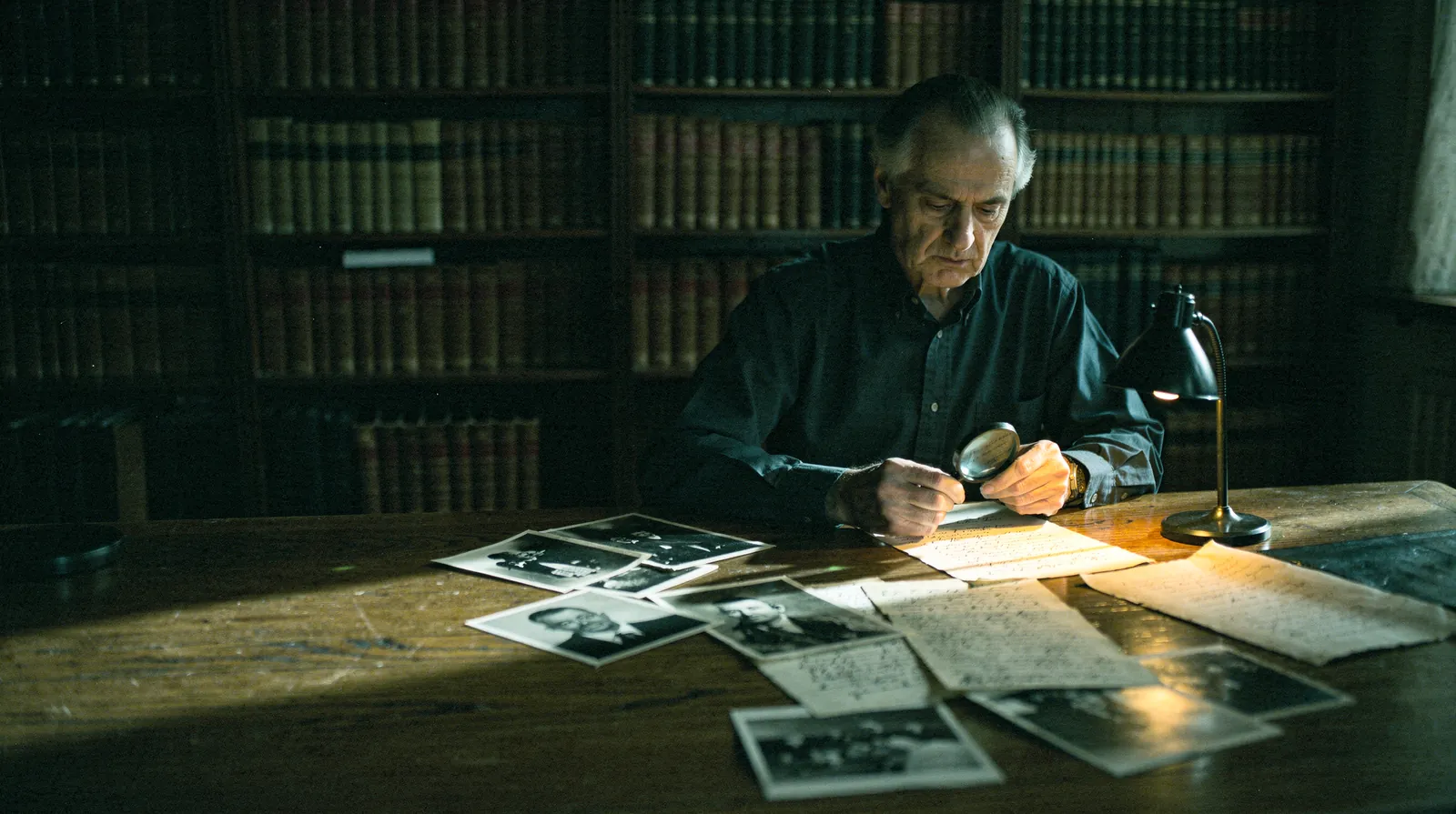
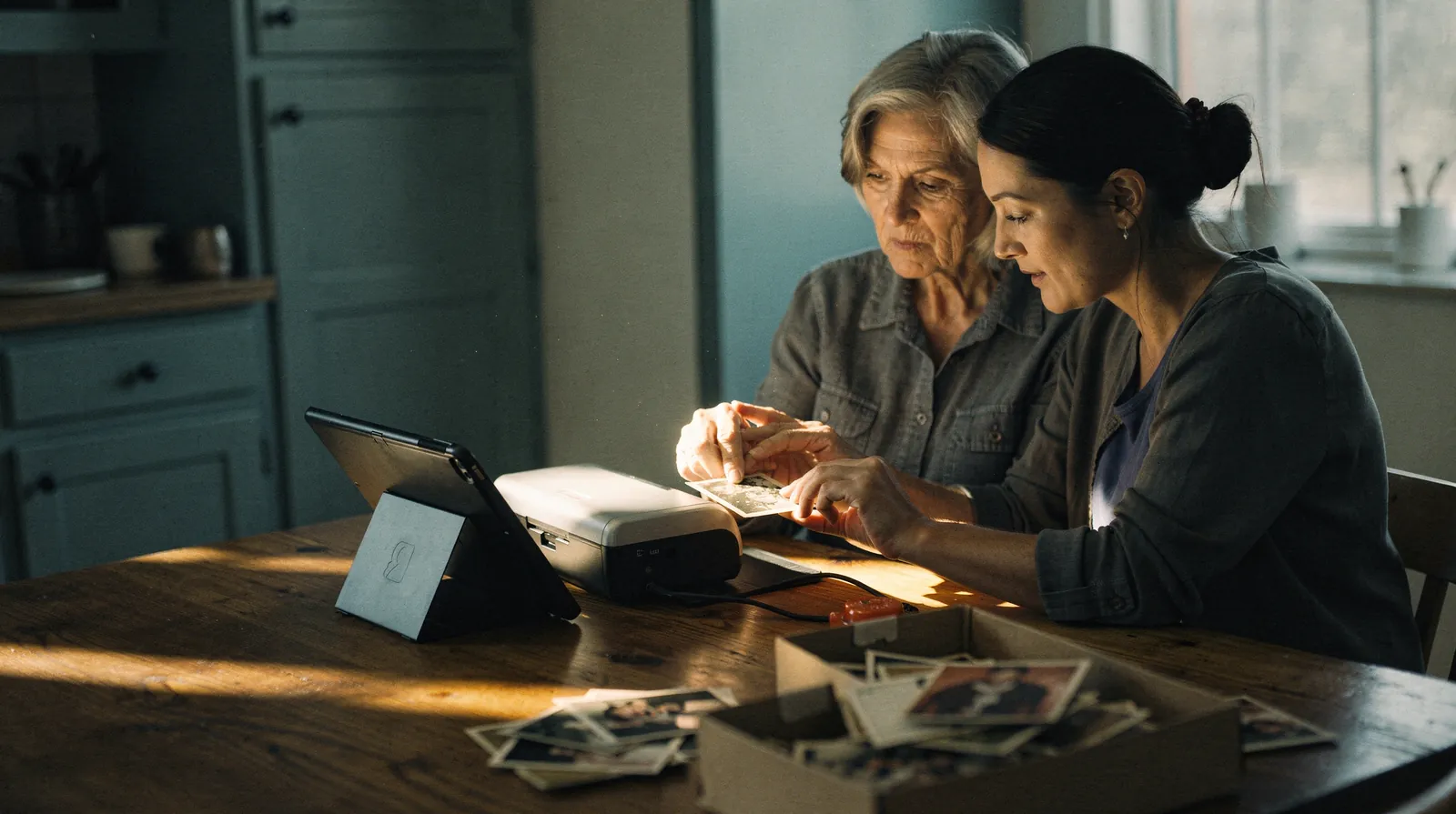

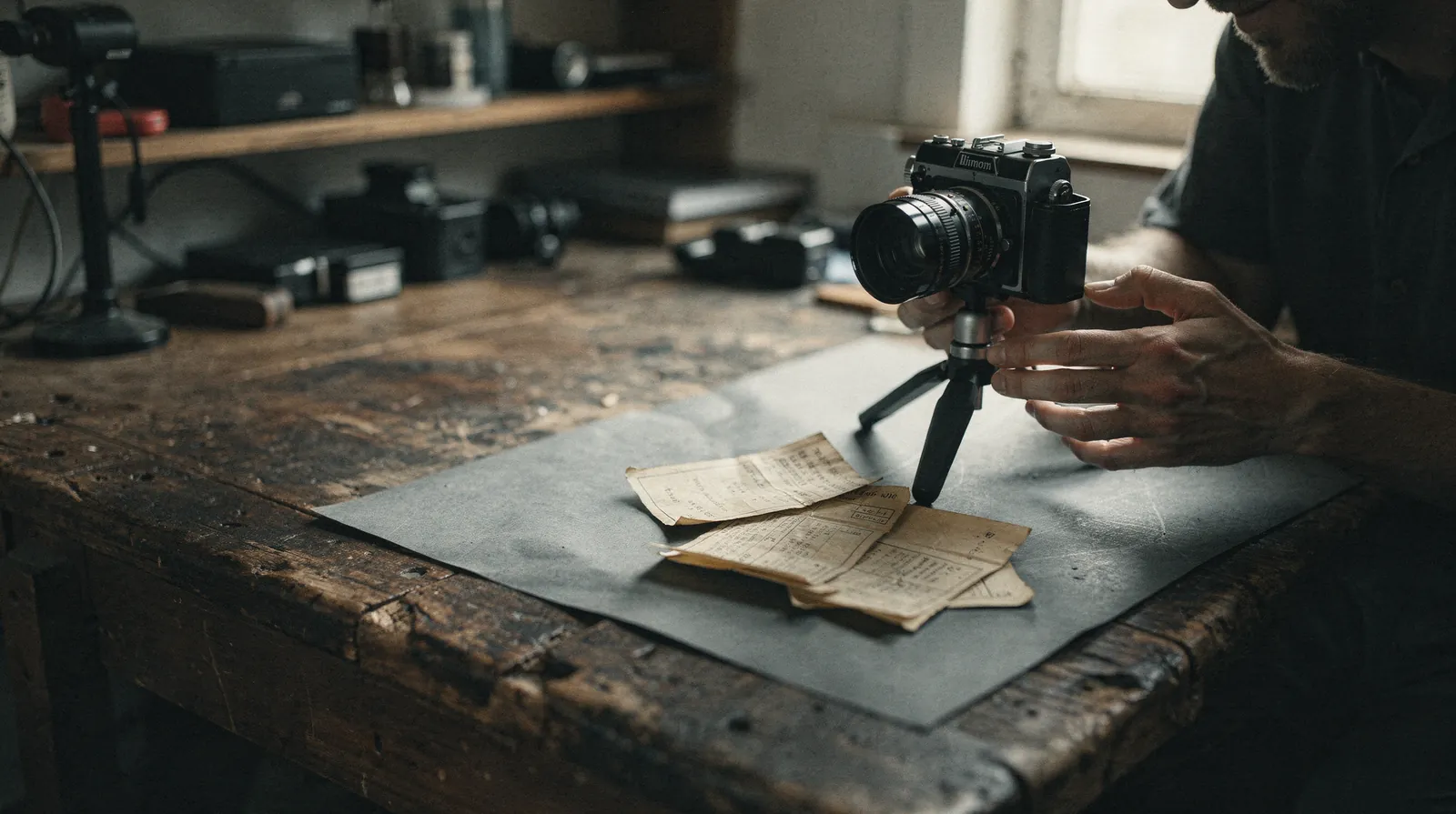

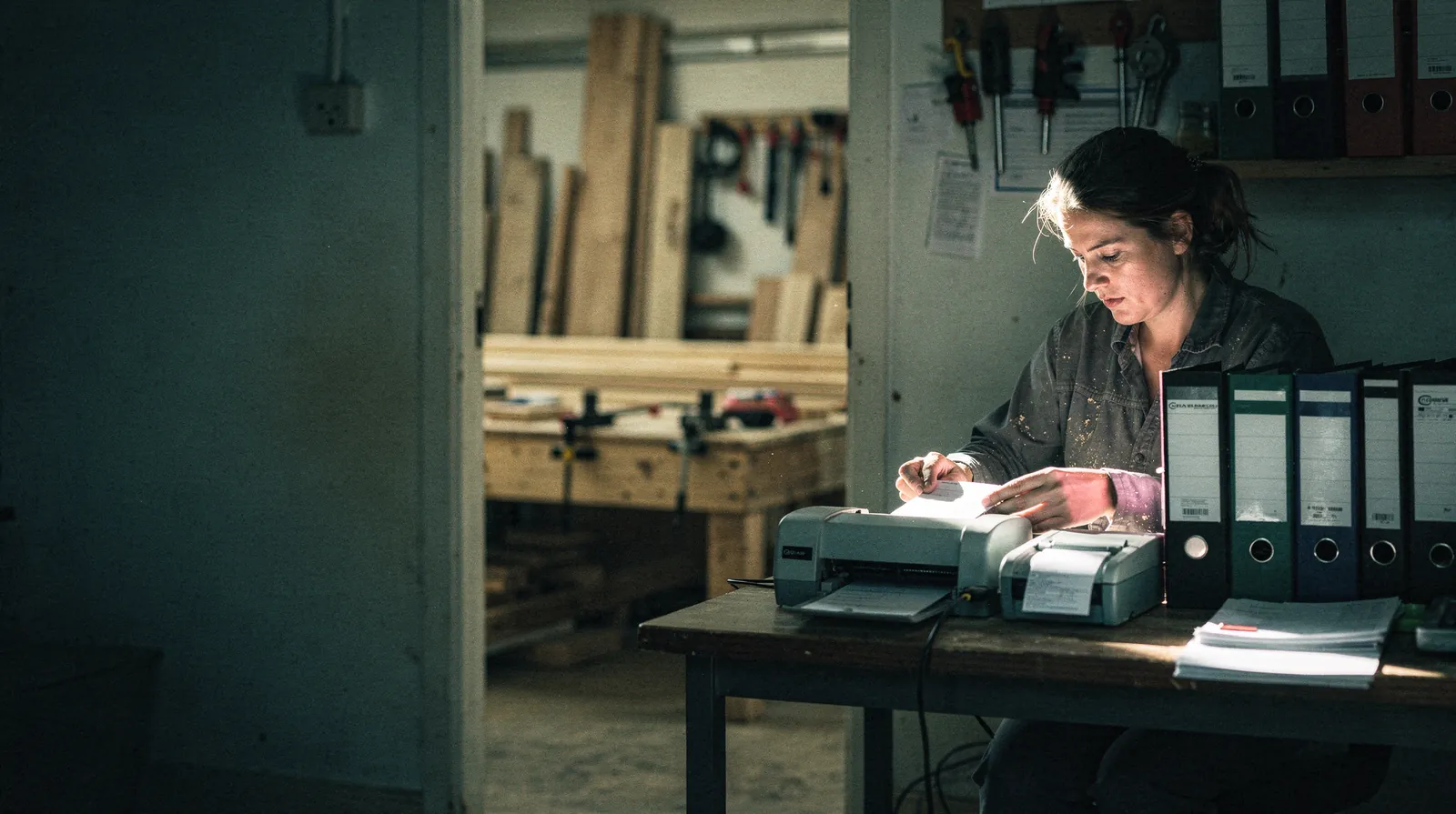
For everyone who keeps things that matter.
The names below change by themselves: archivists, legal teams, investigators, researchers, journalists, records officers, historians, genealogists, families, collectors, photographers, small businesses, public bodies, museums and libraries, estates and executors, and students. Every one of them, with what they use, is written out under "Who it is for" further down this page.
A diagram of the archive at work: files arrive at the surface, are read into text, connected to one another, sealed with a checksum, and found again.
- Runs on your network, or wherever you choose to install it.
- Nothing leaves it unless you say so.
- Originals never change: checksummed four ways, read back on a schedule.
- Every answer cites the pages it came from.
The document management system we were promised
And documents are just the start.
-
Answers with citations
Ask a question of your own material and get an answer whose every claim points at a page, or have it researched in passes and get a report. The model runs where the archive runs.
local model; grounding contract; verification pass
-
Search by appearance
Find a page by how it looks, not only by what it says: a chart, a stamp, a layout you remember.
late-interaction vectors; a numerics gate before any model goes live
-
Evidence-grade custody
Every act on a hash chain. Custody records that verify offline. Trusted timestamps on the anchors.
SHA-256 chain; RFC 3161 timestamps; an offline verifier
-
Redaction that fails closed
A redacted copy is proved clean before it can leave: nothing under the marks, one file, no history.
rasterise; re-recognise; assert, or refuse
-
Backups you can open without us
Every backup is one snapshot: the database, the files and a readable tree of the originals, listed in a plain catalogue and signed with a key you hold. Stock tools restore and prove it; the software is never needed.
restic; a catalogue; a signed manifest; a readable tree
-
Hosted AI only where you say
Off by default. Switched on per stage and per workspace; every call audited; never past a barrier or in evidence mode.
audit per call; barriers; evidence mode
- 73formats in 9 families
- 29languages of search, plus Chinese, Japanese and Korean
- 20modules, 16 of them included
- 11forensic analysers, each with a validation pack
- 4checksums for every file
An archive that understands what it keeps.
Storage is no longer enough.
This is what comes after: an archive that reads what you keep, connects it, preserves it and can prove it.
Documents, pictures, audio and video, email and whole mailboxes, disk images. On your network, or wherever you choose to run it. Nothing leaves unless you say so.
How it works
Five things happen to everything you bring in. Each is done by the archive itself, wherever it runs, and each leaves a record.
-
Bring it in
From a scanner, a camera or a phone; by upload or paste; from a folder you watch, a shared drive, a mailbox or a whole mail store; through an FTP inbox or a printer; as a load file or a disk image.
73 formats in 9 families, each identified by its signature.
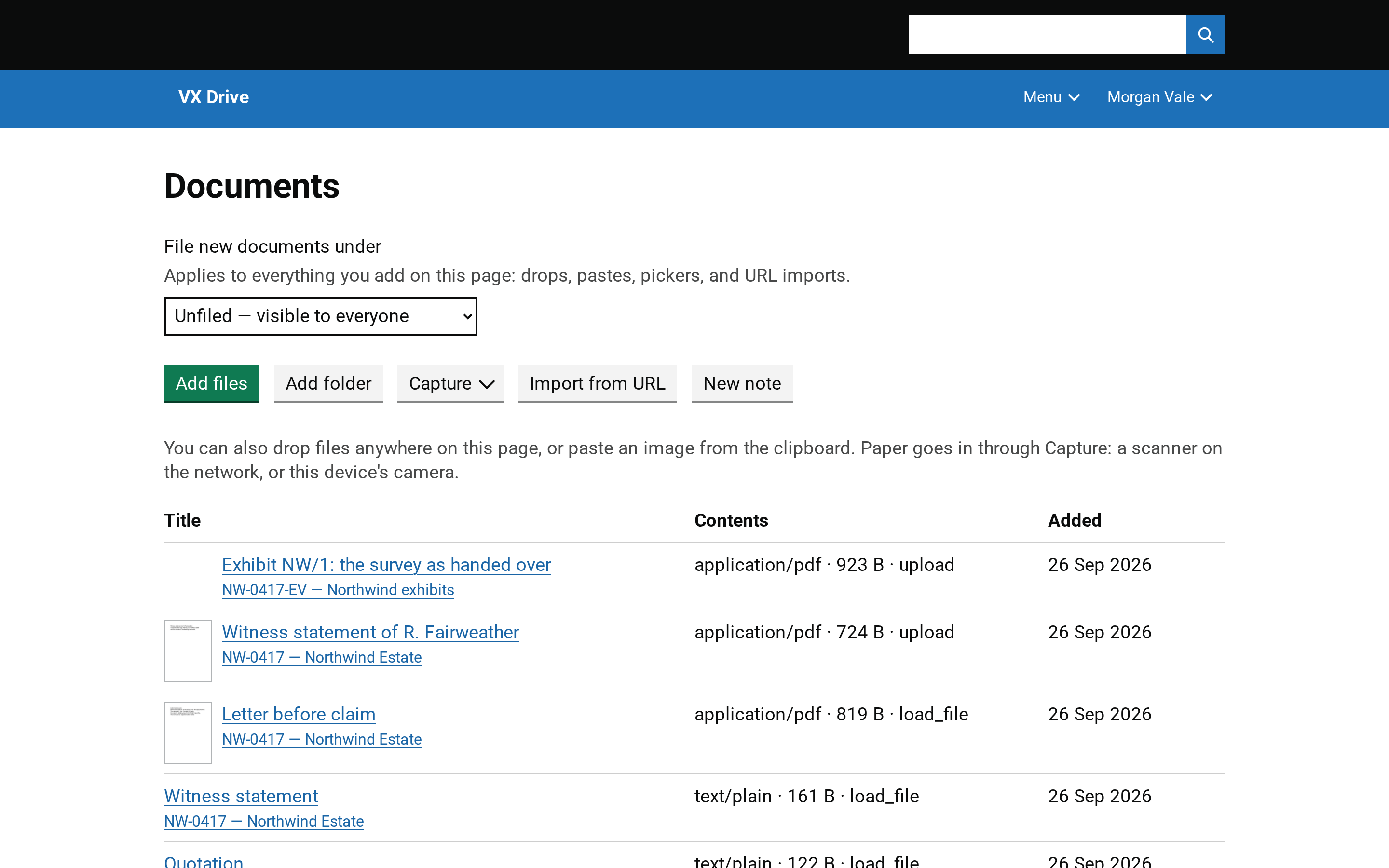
The library of a workspace: a survey, minutes, a photograph, a recording, an email with its attachments and a letter — each identified, its text read, its reading copy made. -
Understand it
Its text is recognised or transcribed, its pictures described if you ask, its reading copy made, its provenance recorded from the moment it arrived. Machine output is labelled as such and never mistaken for a record.
Recognised text, transcripts and descriptions, each labelled with the engine that made it.
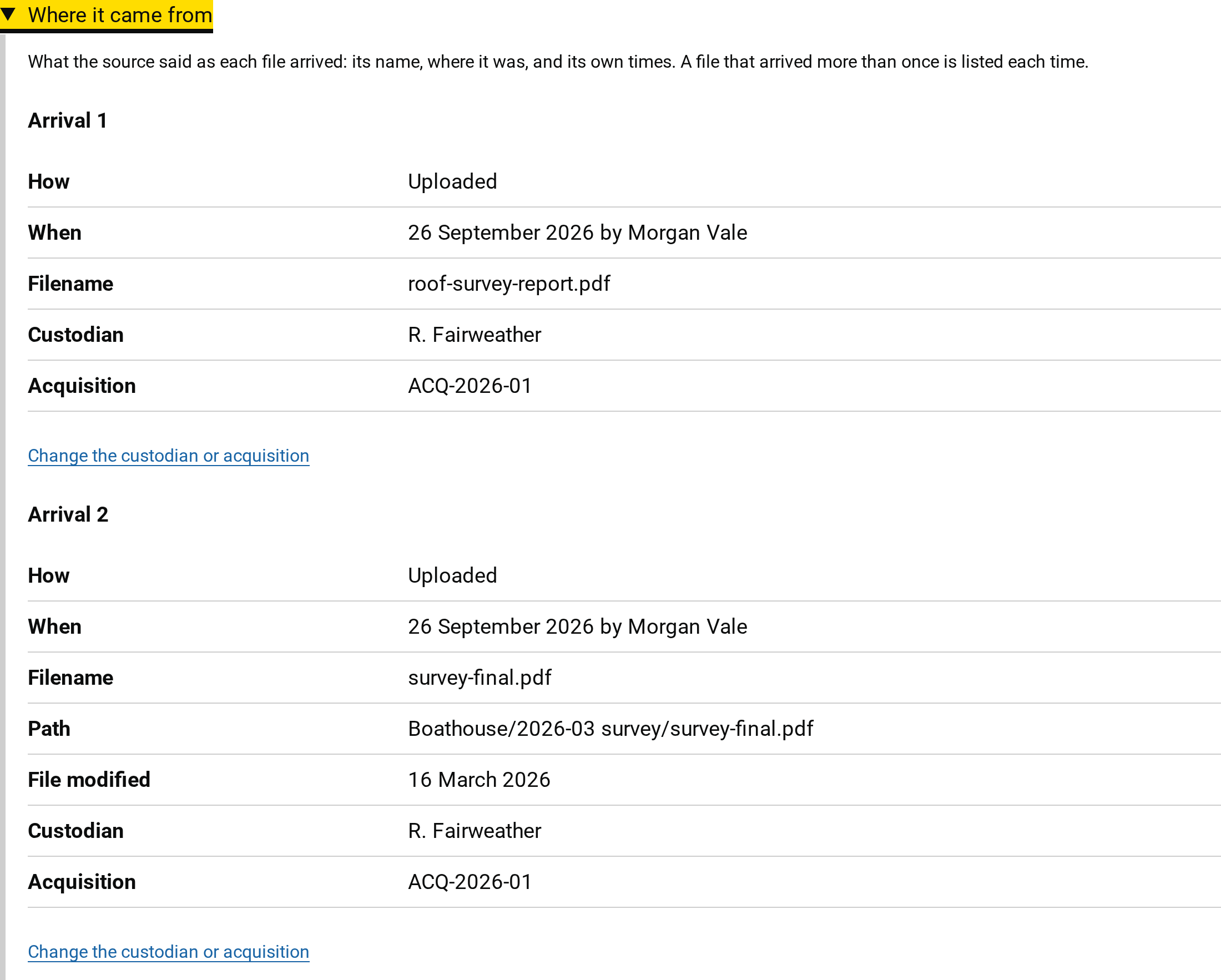
Where a document came from: two arrivals of the same bytes, each with its filename and time, the custodian who held it and the acquisition it belongs to. -
Find and connect it
Search by words, by meaning and by appearance across every kind of file; ask a question and get an answer that cites its pages; see how documents connect, as a list or as a graph.
29 languages of search, plus Chinese, Japanese and Korean.
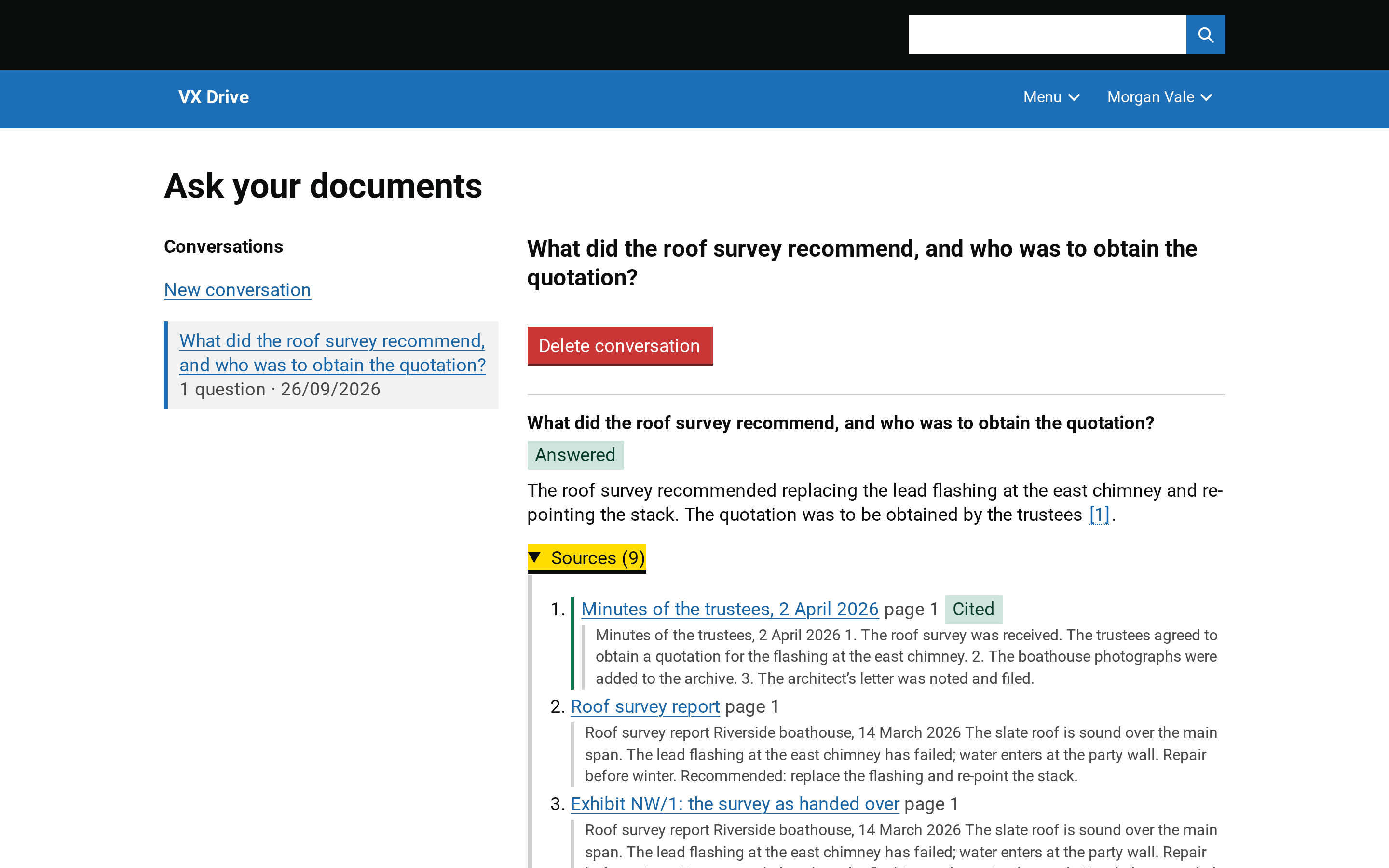
Ask: an answer built from your own documents, every claim pointing at a page, the sources listed beneath. -
Keep it trustworthy
Originals never change. Every file is checksummed four ways and read back on a schedule. Every act goes on an audit chain that verifies offline. Backups go to destinations you choose, and every one opens without us: a plain catalogue, a readable tree of the originals, a manifest signed with a key you hold.
4 checksums per file; backups anyone can open.
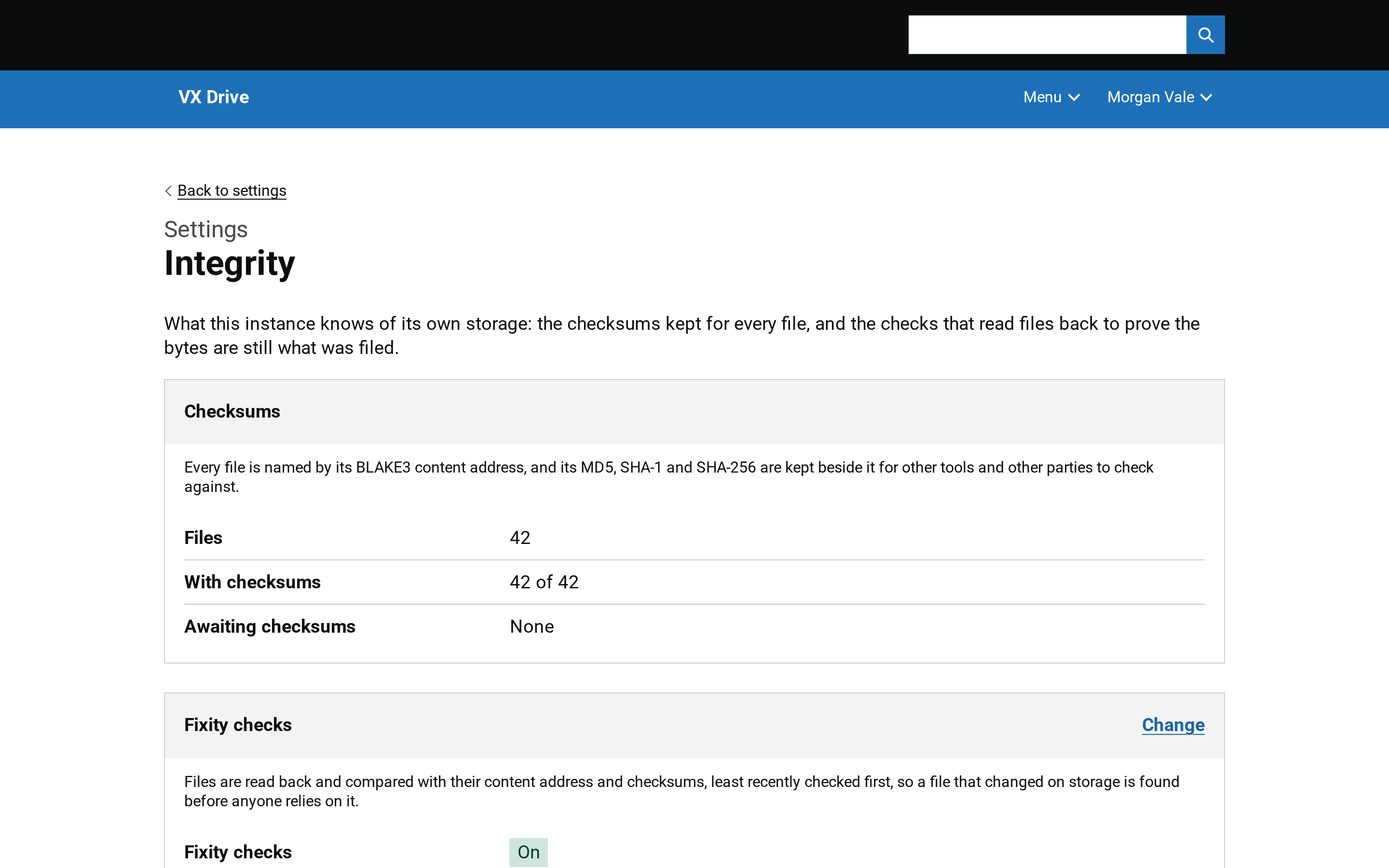
Integrity: the fixity cycle, its window and budget, and the last runs. -
Use it with confidence
Retention and holds. Provenance to the arrival. And when the work demands it: court bundles, disclosure review, redaction that fails closed, forensic examination with a custody record. Each is a module you switch on.
20 modules, 16 included; 11 forensic analysers, each with a validation pack.
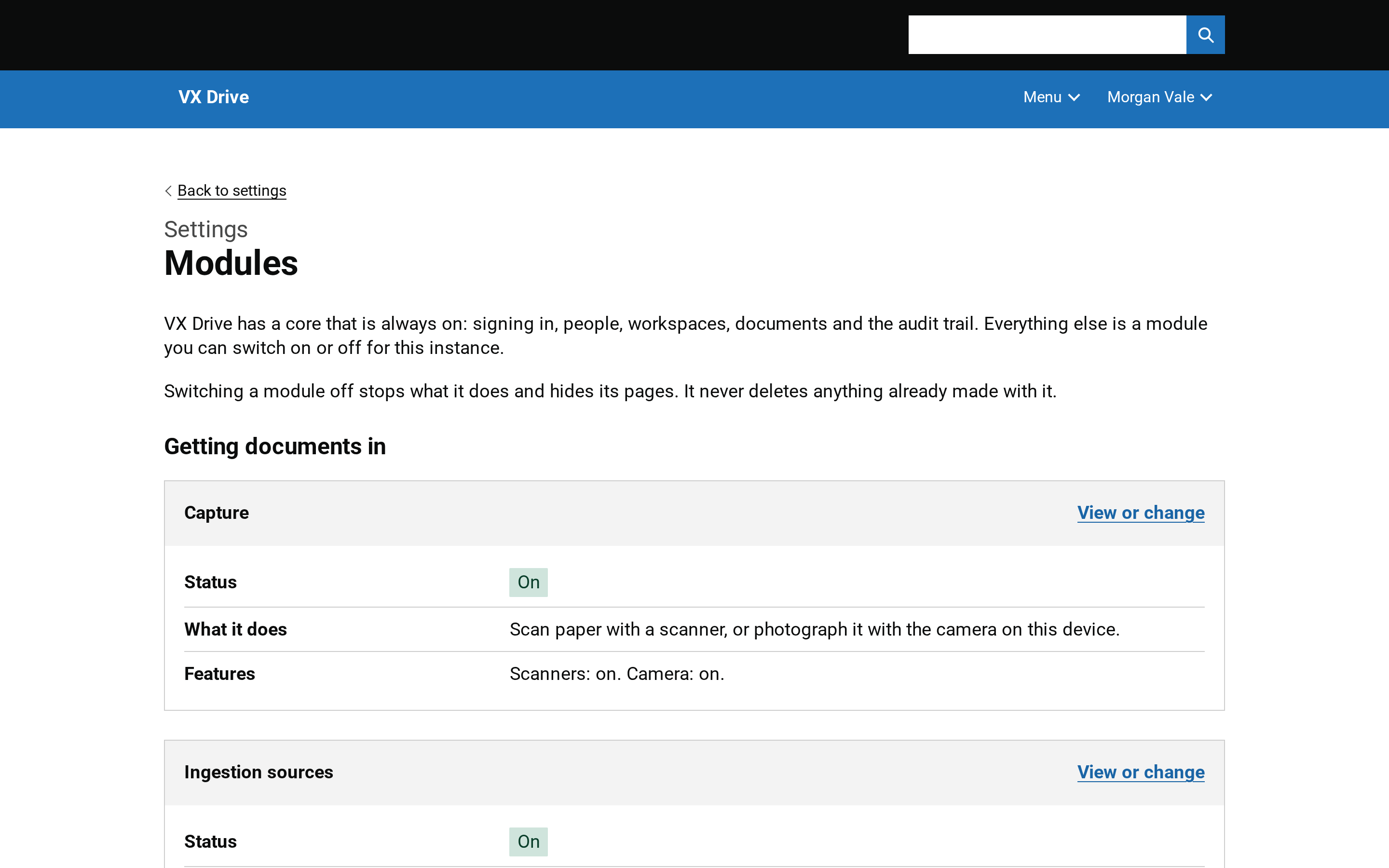
Modules: every module with its standing, and the operator with the final say on each.


One system, different reasons to depend on it
The same archive, the same guarantees. What differs is what you bring to it and which modules you switch on.
Archives and records
Every file is read back on a schedule, every arrival is recorded, every archival copy is checked against the standard, and retention is something you can defend.
Legal teams
Review and code disclosure in batches, redact in a way that fails closed, build court bundles to the judiciary's guidance, and keep a licence that never switches off what is running.
Investigators
Put a workspace into evidence mode, keep a custody record you can verify offline, timestamp it with a trusted authority, and run analysers that report signs and never verdicts.
Researchers and journalists
Keep everything from a field recording to a mailbox in one searchable place, get answers that cite their pages, and see how your documents connect.
Individuals and families
Keep the letters, the photographs, the recordings and the paperwork readable and findable for decades, at home or wherever you choose to run it.
Who it is for: sixteen kinds of keeper, and what each uses
Archivists
- Every archival copy is checked against the standard
- Every file is read back and re-hashed on a schedule
- Every file's origin is recorded the day it arrives
Legal teams
- Review and code disclosure in batches
- Redactions are proved clean before anything leaves
- Court bundles follow the judiciary's guidance
Investigators
- In evidence mode, bytes leave only for a recorded reason
- You can verify the custody record offline
- Eleven analysers report signs, never verdicts
Researchers
- Recordings are transcribed and searchable to the second
- Every answer cites the pages it came from
- See how your documents connect to one another
Journalists
- Keep mailboxes, leaks and recordings in one place
- Nothing leaves your machine
- Everything you were handed is checksummed and traced
Records officers
- A person decides every retention, hold and disposition
- Every action goes on an audit chain
- You can open every backup without VX Drive
Historians
- Search scans and letters in 29 languages
- Keep versions and notes beside the untouched originals
- Opt in to machine descriptions of your pictures
Genealogists
- Scan with a scanner or a phone; names become searchable
- See the connections between people's documents
- Your files stay readable for decades to come
Families
- Keep every photo, letter, recording and form at home
- Ask a question, get the page
- You can open every backup without VX Drive
Collectors
- Keep the pictures and paperwork of every item together
- Every file's origin is on record
- Search by words and by appearance
Photographers
- RAW, JPEG and video are identified and catalogued
- Originals never change
- Spot exact and near-identical duplicates
Small businesses
- Keep invoices, contracts, email and scans in one archive
- Bring files in from folders, mailboxes, scanners and a printer
- The licence never switches off what is running
Public bodies
- Manage records with retention, holds and an audit chain
- It runs on hardware you control
- Regulated modules switch on only under a signed notice
Museums and libraries
- veraPDF verifies every archival copy
- Record provenance, custodians and acquisitions
- Find a page by how it looks
Estates and executors
- Identify and date every document of an estate
- A hold freezes what must not change
- It records who did what, and when
Students
- Ask questions of your notes, papers and recordings
- Lectures are transcribed and searchable
- Try it free for thirty days
Built for the material people cannot afford to lose or misread.
- A disclosure production verified by reading its own load files back.
- A fixity cycle that read every file back against its checksums.
- Provenance traced to the arrival: who brought it, from where, when.
- An answer traced to the page it came from.
Those same safeguards keep family letters, a thesis, a photo archive and the files you simply want to find again.
Built the way the guarantees demand.
An archive is trusted for decades, so the software that keeps it is built to run for decades: compiled, memory-safe by construction, and checked before it exists.
-
A whole class of defects ruled out
The archive's own code is written in a memory-safe language: the buffer overflows, use-after-free and data races behind so many security advisories cannot be written into it. The compiler refuses them before the software is built.
memory-safe by construction; concurrency checked at compile time
-
No pauses to explain
The archive's two services are compiled programs: no virtual machine to warm up, no garbage collector stopping the world under load. Predictable memory on a modest machine, and the same signed binary every time.
two compiled services; predictable memory; a small machine is enough
-
Checked against the schema before it runs
Queries are checked against the database's own schema when the software is compiled, and the schema's rules — row-level security, append-only chains, constraints on every column — hold whatever the code does.
queries verified at build; row-level security; the rules in the database
-
What is borrowed runs in a cage
The renderers and recognisers the archive takes from others run in a sandbox: no network, no file but the one they were handed, a budget of time and memory. A flaw in one of them ends that job, not the archive.
sandboxed helpers; no network; a budget per job
What leaves your archive
| What | What it carries |
|---|---|
| The daily check-inonce a day, to Vertex Lake | The instance's id, the version it runs, its update channel, the checksum of its licence and whether a refresh happened. Five fields; nothing of yours. |
| The registry pullwhen an update is due | Nothing: it downloads the release, verified against the release key, on the schedule you set. |
| A timestamp authorityonly if you configure one | A hash of an audit anchor or a custody record. Never content. |
| Hosted AIonly for the stages and workspaces you switch on | What you allowed, with an audited record of every call. Off by default, and never for a workspace under a barrier or in evidence mode. |
| Backupson your schedule | Encrypted copies, to destinations you choose. |
What Vertex Lake never sees
A document, a page, a word of text, a search, a question, an answer, your users or your audit trail. There is no route by which any of these could reach us.
How it is sold
You buy a perpetual licence for a version, and maintenance and support by the year. The premium modules are added by the year, each on its own. If you stop paying for maintenance, everything you installed keeps working for good; you stop receiving updates and support until you renew. The next major version is a paid upgrade at a discount for holders of the previous one.
Try it in an afternoon
Create your account and start the evaluation
Every module, thirty days, no card. A sign-in link by email; no password to keep.
Download your install kit
One file: your licence, our registry credential and the portal's address.
Run the installer where you want it
A Linux machine (Debian 13, Ubuntu 26.04, Fedora, RHEL 10 or Arch), physical or virtual, on your network or in a cloud you control. The archive is reachable in minutes, with a certificate, backups and updates arranged.
sudo ./install.sh --kit acme.vxkit --name docs.example.internalThe system of record for everything you keep.
Thirty days with every module, no card, wherever you choose to run it.